
A Therapist’s Guide to Riding Out Big Feelings

Emotion regulation for anxious, depressed, and neurodiverse minds learning to stay instead of shut down
Big feelings can feel like emergencies. They often don’t show up as gentle signals. They arrive like giant waves that knock you off your feet — sudden panic, heavy hopelessness, sharp rejection, sensory overwhelm, or anger that feels too big for the room.
If you’ve ever thought:
“Why do I feel everything so intensely?”
“Why can’t I just calm down?”
“What’s wrong with me?”
I want you to hear this clearly: Nothing is wrong with you. Your nervous system is trying to protect you.
The work we do in therapy isn’t meant to eliminate our big feelings. The work is learning how to ride them without being pulled under.
Why Big Feelings Feel Bigger for Some Brains
Anxious, depressed, and neurodiverse nervous systems are often more sensitive — and that sensitivity isn’t a flaw. For people with anxiety, the brain is scanning for threat. For people with depression, emotions can feel heavy, stuck, or overwhelming. For neurodivergent individuals — including those with ADHD or autism — emotional intensity and sensory processing differences can amplify internal experiences.
Our emotions as often operate as situational predictors — your brain trying to make meaning and keep you safe. When your history includes stress, criticism, trauma, or chronic overwhelm, your brain becomes highly efficient at predicting danger. What can the result be? Big reactions. Fast.
Step 1: Stop Trying to “Win” Against the Feeling
When anxiety spikes or sadness floods in, most people do one of three things:
Fight it
Judge it
Escape it
Ironically, resistance often makes our emotions even louder.
Instead of asking:
“How do I make this stop?”
Try asking:
“Can I let this be here for a maximum of 30 minutes?”
Neuroscience suggests that the physiological surge of an emotion often peaks and shifts within about 30 minutes — unless we keep reactivating it with rumination thoughts.
What if your job wasn’t to erase the wave but rather stay on the surfboard?
Step 2: Anchor the Body First
Emotion regulation is not primarily a thinking skill. It’s actually more of a nervous system skill.
When you notice a feeling surge try some of these options:
Press your feet firmly into the floor.
Slow your exhale longer than your inhale (think square intentional breathing)
Put one hand on your chest and one on your abdomen.
Name five visual things you see in the room around you.
By doing practices like these, you’re sending your body the message:
“I am not in immediate danger.”
For neurodiverse clients especially, sensory anchors such as these can be extremely powerful means of regulation:
A weighted blanket
Cold water on the wrists
Gentle rocking
Noise-canceling headphones
Regulation is physical before it is cognitive.
Step 3: Name the Emotion Specifically
“Overwhelmed” is often a bundle of multiple feelings. Be as specific as possible.
Are you:
Anxious?
Disappointed?
Rejected?
Embarrassed?
Grieving?
The more precisely you name an emotion, the more effectively your brain can process it. Specificity creates space and communicates validation.
Instead of:
“I’m spiraling.”
Try:
“I’m feeling anxious and uncertain about how that conversation went.”
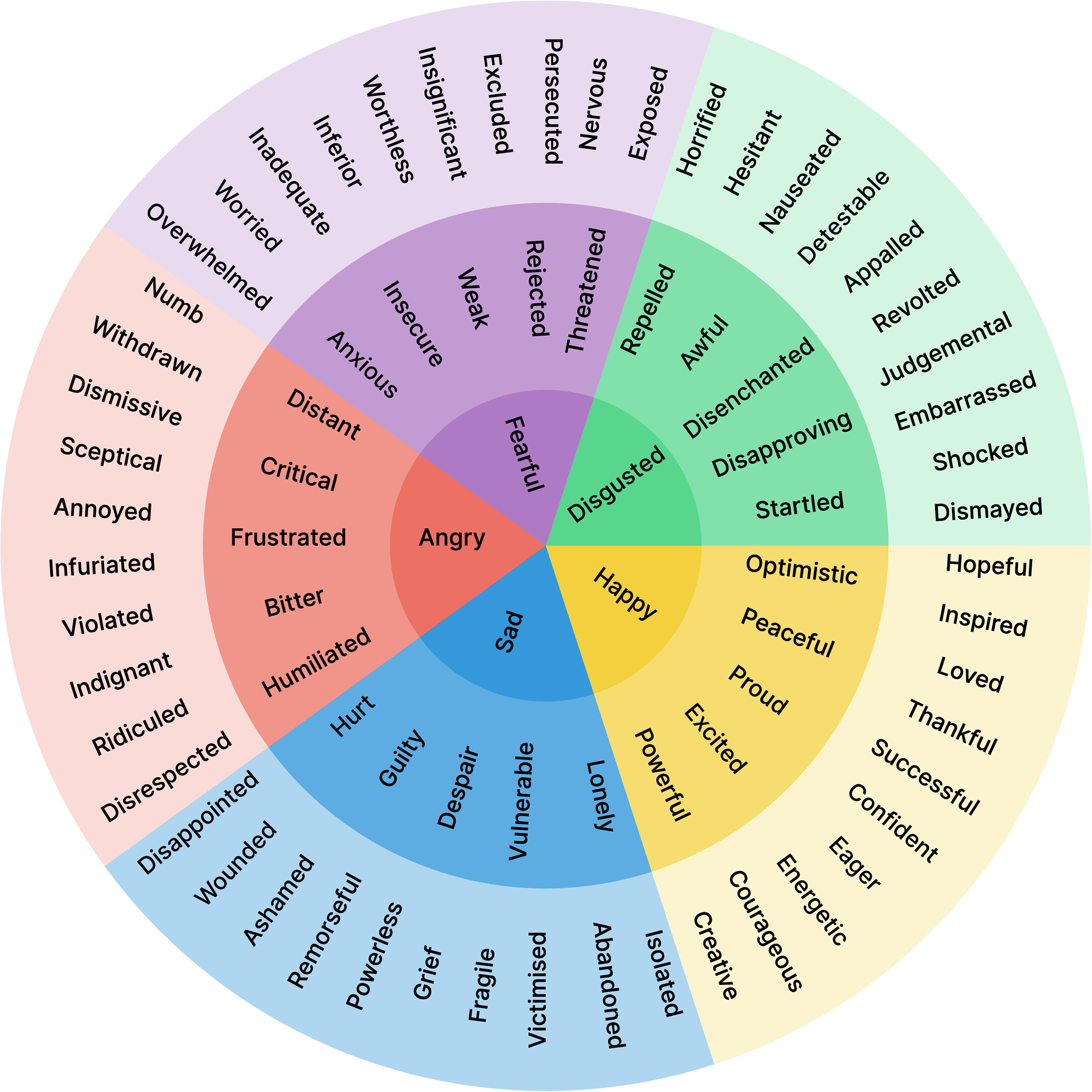
Try exploring an Emotion Wheel to learn more specific synonyms for the emotions you are actually feeling. This can help create clarity for both you and whoever you might be trying to communicate effectively with.
Step 4: Allow Without Abandoning Yourself
There’s a difference between feeling an emotion and becoming the emotion.
Instead of:
“I am a failure.”
Try the reframe:
“I am noticing shame right now.”
That subtle shift builds flexibility and validation to the emotion and your experience. It helps remind you that you are the observer of the storm not the storm itself.
Step 5: Ride the Aftermath Gently
After a big emotional wave passes, many people shame themselves and think things like:
“I overreacted.”
“I’m too much.”
“I ruined everything.”
This secondary shame often causes more suffering on top of the original feeling. Self-compassion researcher Kristin Neff actually reminds us that treating ourselves kindly during an emotionally painful experience improves resilience — not weakness.
Here are some brief self-compassion resets to practice saying instead of shaming:
That was intense.
It makes sense my nervous system reacted.
I’m allowed to be human.
A reminder for those of us with anxious minds: discomfort is survivable. Your brain is trying to prevent future harm. Thank it. Then gently widen the lens.
Ask:
“What else could be true?”
“Is there actual danger, or just discomfort?”
A reminder for those of us with depressed minds: emotions move in waves, even when the tide feels low for a long time. Depression can flatten or magnify emotions. You may feel numb — until suddenly you don’t. Small regulation practices done consistently matter more than dramatic shifts.
A reminder for those of us with neurodiverse minds: adaptation is often wisdom. If you experience intense emotional reactions, rejection sensitivity, or sensory overwhelm — your system may simply process more data, more deeply. That doesn’t mean you’re broken.
It simply means that for you regulation may require:
Predictable routines
Clear transitions
Sensory supports
Direct communication
The Goal Isn’t Calm. It’s Capacity.
Many people come to therapy wanting to “feel less”. But what we actually build is the ability to: feel fully, stay present, and respond intentionally. Big feelings aren’t proof that you’re unstable. They’re proof that you care, that you’re wired deeply, that your nervous system is alive. Learning to ride them is a skill. And skills can be both learned and practiced.
Next time a wave rises, instead of bracing against it, try whispering: “This is a wave. Waves crest. Waves fall. I can ride this.”
You don’t have to drown in your feelings. You can learn to surf and ride the wave of the emotion.
Disclaimer: this account is for educational & entertainment purposes only. engaging with this account is not therapy, and nothing stated here should be taken as professional advice or as a replacement for therapy. content here may or may not apply to you. please read the pinned disclaimer prior to engaging with this content. If you are interested in learning more about therapy sessions with Emily, please reach out via email: emily@emilylewis.co or by phone: 682-334-3796.
